
The sources of future European peace

What material is peace made of? Humanity has pondered this question and its possible answers ever since it began to understand that human beings make decisions both rationally and emotionally. The rational calculus in decision making is comprised of several phases. The first phase occurs when a subject receives a series of external stimuli. Next, the subject evaluates the possible response options, considering the costs and benefits of each. Subsequently, the individual makes a decision based on the option that maximizes the benefits and minimizes the costs. Or at least this is what rational choice studies tell us. However, as we all know, human beings make decisions very differently, don't we?
People make decisions largely guided by emotions; and states are led and formed by people, at least until generative AI makes the leap to governance. So, if we go into the study of power dynamics and, more specifically, how strategic calculations are made, we understand that whenever a decision is made, it is made with the reaction of the other actors in the environment involved in mind. Applied to the civil sciences, we can give the example of ecological transition measures. Governments at different levels of administration, before making a decision on the measures to be taken to improve the quality of life of their inhabitants, carry out a comparative study with other countries. Not only to find out which measures are most effective, but also to know to what extent they should accelerate or slow down the pace of the transition so as not to harm their economy and competitiveness.
The strategic calculus for achieving and maintaining peace is one of the most difficult to answer with certainty. This is where the theory of deterrence comes in, that principle which in Latin reads si vis pacem para bellum, if you want peace, prepare for war. This realistic principle is key to understanding international relations. It is based on the premise that to achieve peace you need to create a military structure that is both credible and destructive enough so that your adversary will not dare to disrupt your security.

And of course the next question now becomes necessary, how credible and destructive does such a military structure have to be to guarantee peace? There is no clear and direct answer. The most honest one is a crisp “it depends”. In the early 1960s, during the Cold War, the Soviet Union and the United States embraced the MAD (Mutual Assured Destruction) doctrine, whereby both actors acknowledged that they had sufficient nuclear capability that in an eventual armed conflict, both superpowers (and the planet) would be destroyed. However, this did not prevent the escalation in the military capabilities of both countries from continuing to increase. This is an example where in the strategic calculation of both actors the best way to guarantee their security was to enhance the insecurity of the rival.
For that reason, rearmament poses a security paradox that has no simple solution. For the way for a political actor to feel guaranteed its security is at the cost of increasing the opponent's feeling of insecurity. Both sides then enter into a spiral of increasing military deterrent capabilities.
The other variable in the equation is to assess how politically capable your adversary is of launching an attack, and this factor is one of the most dangerous because it includes the most emotional factor. The first variable of military spending is objective, but the second includes the willingness to use acquired military power. This is where the Madman Theory comes into play. This theory is based on the strategy that the political leader and/or military leadership has irrational, unpredictable and aggressive behavior. The underlying idea is to make adversaries believe that at any time and to any stimulus you can react disproportionately. Faced with the apparent lack of rules and clear “red lines”, the madman seeks to make adversaries (and allies) move at will for the risk of awakening the beast.
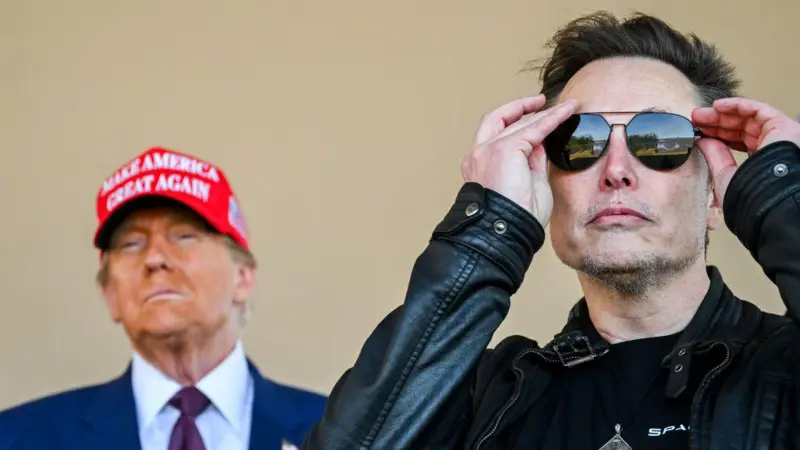
President Trump is a clear subscriber to this theory and bases his defense strategy on uncertainty. Faced with the United States' traditional European allies, he is proposing a total unilateral reset of relations. The threat of non-application of NATO Article 5, whereby an attack on any member of the alliance means an attack on all, has proved credible enough for European capitals. Peace on the European continent over the past 80 years has been largely guaranteed by the U.S. military deterrent umbrella. As the superpower with the greatest conventional military power on the planet and in history, credibility over the use or non-use of that power is capable of preventing or creating wars.

It is true that if we take a look at history, the United States has had great problems when it comes to “winning” wars since the end of World War II. In Korea the conflict is still ongoing, in Vietnam and Afghanistan they were defeated and the outcome in the intervention in Iraq or Yugoslavia is far from being a “success”. Now with the unilateral abandonment of Ukraine the historical record does not improve, but the fear generated by US intervention does not lie in its capacity to win wars, but in its destructive capacity, and that is certain.
Now that the Asia First thesis dominates the new administration's strategy, the European security environment must build a military deterrent equivalent to that provided by the American partner. To this end, a comprehensive and coordinated European security apparatus must be organized with both sufficient military hardware and the political will to use it in the face of present and future threats. Likewise, the spirit of this new alliance must be to be able to act autonomously from the United States and even more so in view of the recent strategic flexibility it is adopting. At present, the European continent does not face a credible threat from Russia, as the imperialist adventure in Ukraine has left Russian military capabilities badly damaged. Taking into account estimates, the actual number of Russian military dead could range from 146,194 to 211,169, with the estimate of the wounded being three times that figure. Added to this are the demographic and economic problems resulting from the war that have led Russia to throw itself into the arms of China, Iran and North Korea, while its presence in Armenia or Syria has receded. However, in the medium and long term, the threat to the continent is very real. The foreseeable desire for revenge for the unconditional support given by Europe to the Ukrainian cause is going to emerge sooner or later, and by that time Europe must have a credible and autonomous deterrent apparatus to curb such desires.
In the past, the European partners had certain obligations towards the American partner, such as the intervention in Iraq or the major operation in Afghanistan, mainly as “payment” for the security provided to the continent. If the United States wishes to focus its entire grand strategy on the Asia-Pacific area, as it has been announcing since the Obama administration, it can do so, but not with European troops. For one can guess that behind the impositions of the increase to 5% of GDP in defense spending on NATO partners (a figure that the United States does not meet) is the intention to provide the transatlantic partners with sufficient military power for an eventual war with China.




Comments